RITE4SITE Occupational Screening
Respirator Fit Testing
Get in touch today for an obligation-free quote.

Why RITE4SITE?
- RespFit-trained technicians — testing to AS/NZS 1715 and AS/NZS ISO 16975.3 by a competent, accredited operator.
- Both methods — qualitative and quantitative fit testing to suit your hazard and respirator type.
- On-site & mobile — testing at your workplace, minimising downtime.
- Compliance-ready documentation — the records you need for your RPE program and audits.
- Servicing NSW, based in the regions — from our Dubbo and Wagga Wagga bases.
- Part of HMC Group Solutions — a regional NSW safety and training business trusted across the mining, civil construction, renewables and drilling sectors.
The detail
What you need to know.
Service Description
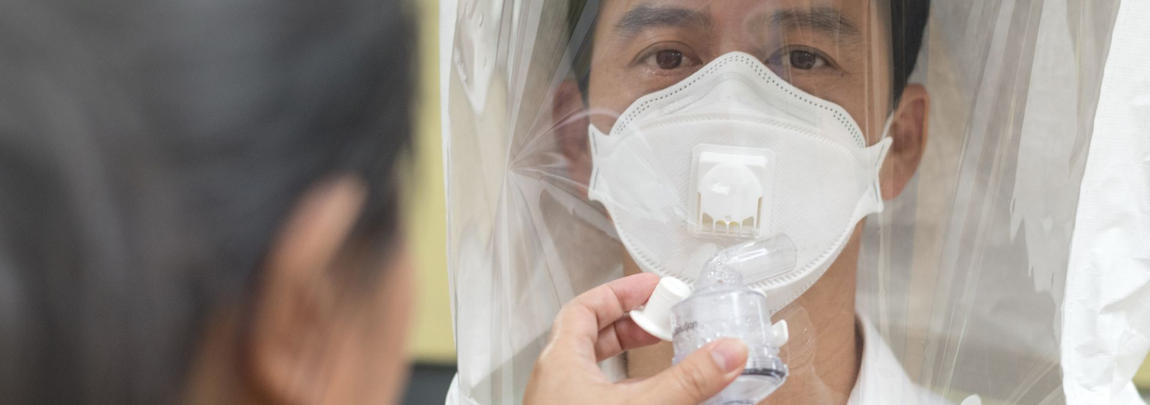
Respirator fit testing is essential to ensure workers are adequately protected from airborne contaminants — including respirable crystalline silica (RCS), dusts, fumes, mists and other hazardous substances. A respirator is only as good as its seal: if it doesn't seal effectively to the individual wearer's face, contaminated air leaks in around the edges rather than passing through the filter, significantly reducing protection and placing the worker at risk.
PCBUs have a duty to ensure workers are provided with suitable respiratory protective equipment (RPE) where airborne hazards can't be eliminated or adequately controlled — and fit testing is a critical part of an effective respiratory protection program. RITE4SITE provides professional qualitative and quantitative respirator fit testing across regional NSW, in accordance with AS/NZS 1715:2009 and AS/NZS ISO 16975.3:2023. Servicing Dubbo, Wagga Wagga and New South Wales.
Silica & Your Regulatory Obligations
Fit testing has moved from good practice to a specific regulatory requirement for silica work. Where workers are exposed to respirable crystalline silica and controls can't reduce exposure below the workplace exposure standard of 0.05 mg/m³, tight-fitting respirators must be fit tested — an enforceable obligation, not just standards compliance, across construction, engineered stone, tunnelling, mining and quarrying. A documented fit-testing program is a key part of demonstrating you're meeting that duty.
Qualitative vs Quantitative Fit Testing
There are two recognised methods, and they're not interchangeable — the right one depends on the respirator and the level of risk:
- Qualitative (QLFT)
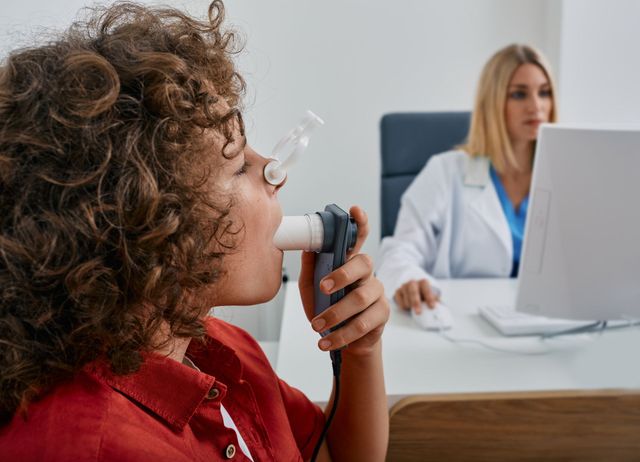
- Quantitative (QNFT)
Contact us today and we'll help you determine which method suits your hazard, respirator type and risk level.
The Clean-Shaven Requirement
Tight-fitting respirators can only seal against bare skin. Facial hair along the seal line — including stubble — prevents a reliable seal, and the level of protection becomes unpredictable. Workers must be clean-shaven at the sealing area on the day of the fit test and whenever they wear the respirator. Where a worker can't or won't be clean-shaven, a loose-fitting powered air purifying respirator (PAPR) or airline hood — which doesn't rely on a facial seal and doesn't require fit testing — may be the appropriate alternative.
What the Test Involves
- Pre-test checks — we confirm the wearer is clean-shaven at the seal area (see below), and that the respirator make, model and size are recorded.
- Fitting & seal check — the wearer dons the respirator and performs a user seal check.
- Test exercises — the wearer performs a series of movements (normal and deep breathing, head turning, talking, bending) to confirm the seal holds during real-world movement.
- Result — for quantitative testing, a numerical fit factor is recorded against the pass criteria; for qualitative, a pass/fail is recorded.
- Documentation — you receive the records required to support your respiratory protection program and demonstrate compliance, including the wearer, respirator make/model/size, method, result and date.
Standards & Compliance
Our fit testing is conducted in accordance with:
- AS/NZS 1715:2009 — Selection, use and maintenance of respiratory protective equipment (fit testing is a requirement of this standard)
- AS/NZS ISO 16975.3:2023 — Respiratory protective devices: Fit-testing procedures (the current fit-testing methods and operator competencies)
Fit testing must be carried out by a competent person. RITE4SITE's technicians have completed training with a RespFit-accredited respirator fit test trainer — RespFit being the national accreditation program developed by the Australian Institute of Occupational Hygienists (AIOH) — which provides the clearest defensible evidence that testing was done to the current standard by a competent operator.
More from RITE4SITE
Our Services


Get in touch today for an obligation-free quote.