RITE4SITE Occupational Screening
Workplace Hearing Assessments
Get in touch today for an obligation-free quote.


Why RITE4SITE?
- Mobile audiometric booth — a controlled, compliant testing environment brought to your site, so you're not sending workers off-site.
- SAAA-qualified technician — testing by a qualified operator to AS/NZS 1269.4
- Clear reporting — a detailed workplace hearing screening report to support your hearing conservation program and compliance records.
- Servicing NSW, based in the regions — from our Dubbo and Wagga Wagga bases.
- Part of HMC Group Solutions — a regional NSW safety and training business trusted across the mining, civil construction, renewables and drilling sectors.
The detail
What you need to know.
Service Description
Workplace hearing assessments play a critical role in protecting workers from occupational noise-induced hearing loss and meeting your work health and safety obligations. Where workers are exposed to hazardous noise, regular hearing monitoring helps identify early changes in hearing and shows whether your noise controls are working — before damage becomes permanent.
RITE4SITE provides professional workplace screening audiometry and hearing conservation monitoring across regional NSW, conducted in accordance with AS/NZS 1269.4:2014 — Occupational Noise Management: Auditory Assessment. Assessments are completed at your workplace using our purpose-built mobile screening unit, which features a dedicated audiometric booth — a controlled testing environment that minimises disruption to site operations. Servicing Dubbo, Wagga Wagga and New South Wales.
Regulatory Requirements
Audiometric testing is no longer optional for many NSW workplaces. Under Clause 58 of the NSW Work Health and Safety Regulation — which commenced on 1 January 2024 and reached its final stage on 1 January 2026 — a PCBU that requires workers to frequently use hearing protection for noise exceeding the exposure standard must provide audiometric testing:
- New workers — a baseline hearing test within 3 months of commencing.
- Existing workers (employed before 1 January 2024) — a hearing test was required before 1 January 2026.
- Ongoing — a monitoring test at least every 2 years while the worker remains exposed.
The workplace noise exposure standard is LAeq,8h of 85 dB(A) and LC,peak of 140 dB(C). If your workers are frequently in hearing protection above these levels, testing is a legal requirement — and RITE4SITE can bring it to your site.
What the Test Involves
- Pre-test check — we confirm the worker's details and note recent noise exposure. (Monitoring tests are best done a few hours into a shift to detect temporary threshold shifts.)
- Otoscopic examination — a visual check of the ear canal and eardrum for wax, blockage or other issues that could affect results.
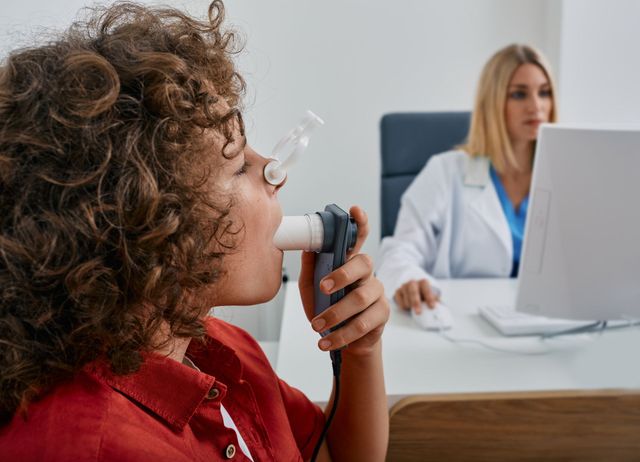
- Pure-tone audiometry — using a calibrated audiometer in our audiometric booth, we measure hearing thresholds for each ear across the standard occupational frequencies.
- Baseline or monitoring comparison — baseline audiograms establish a reference; monitoring audiograms are compared against it to detect any significant threshold shift.
- Referral where indicated — where results suggest it, we advise if a worker should be referred for further audiological or medical assessment.
- Detailed report — a workplace hearing screening report is provided to you, supporting your hearing conservation program, regulatory compliance and ongoing monitoring of worker hearing health.
Standards & Compliance
Our hearing assessments are conducted in accordance with:
- AS/NZS 1269.4:2014 — Occupational Noise Management: Auditory Assessment (the audiometric testing procedures)
- AS/NZS 1269 series — Occupational Noise Management (the broader framework, including noise measurement, control and hearing protector programs)
Audiometric testing must be carried out by a competent person with the training and experience to perform the test, interpret the results and present them appropriately (AS/NZS 1269.4, Appendix D). RITE4SITE's audiometry technician holds a qualification in Workplace Screening Audiometry and Hearing Conservation accredited by the Screening Audiometry Association of Australia (SAAA), so your testing is conducted by a qualified operator to the standard.
A documented testing program — baseline, monitoring and clear reporting — is how you meet your Clause 58 obligation and demonstrate due diligence to the regulator and to workers' compensation insurers.
More from RITE4SITE
Our Services
Get in touch today for an obligation-free quote.